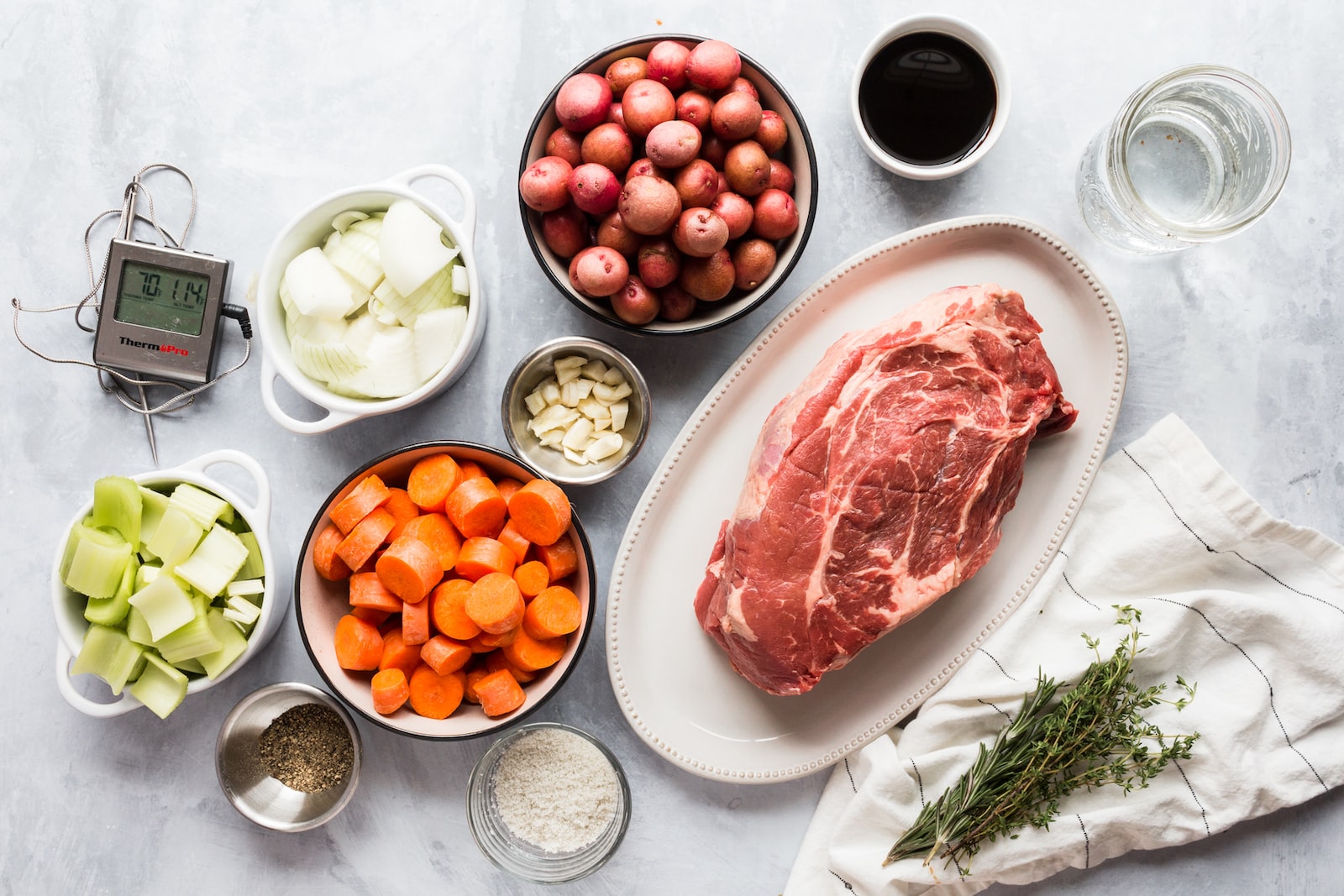
Spices: salt, pepper, paprika, cumin, garlic powder, onion powder, dried basil, dried oregano, etc.
Herbs: fresh basil, fresh cilantro, fresh parsley, etc.
Baking ingredients: flour, sugar, baking powder, baking soda, yeast, etc.
Dairy products: milk, cream, butter, cheese, sour cream, etc.
Oils and fats: olive oil, canola oil, vegetable oil, coconut oil, etc.
Vinegars: balsamic vinegar, apple cider vinegar, red wine vinegar, white wine vinegar, etc.
Sweeteners: honey, maple syrup, brown sugar, granulated sugar, etc.
Proteins: chicken, beef, pork, tofu, eggs, etc.
Produce: onions, garlic, carrots, potatoes, bell peppers, tomatoes, etc.
Canned goods: crushed tomatoes, diced tomatoes, beans, corn, etc.
Grains: rice, pasta, bread, oats, etc.
Nuts and seeds: almonds, walnuts, sunflower seeds, pumpkin seeds, etc.
Condiments: soy sauce, Worcestershire sauce, hot sauce, ketchup, mustard, etc.
Build a practical pantry
Choose ingredients for the dishes you actually cook: a cooking oil, salt, a few regularly used spices, rice or pasta, canned beans or tomatoes, and fresh basics are a useful start. Salt is a mineral seasoning, not a botanical spice. Keep dry goods sealed and check labels and storage instructions.
Learn more in Herbs and How To Use Them, The Wonderful World of Spices: Exploring Flavors and Pairings and Comparison of Cooking Oils. Then choose a recipe before buying unfamiliar ingredients.
Editorial update: October 23, 2026. Updated for clarity, completeness and the corrections noted in the linked sources, where supplied.
