Recipe at a glance
- Estimated yield: 32–36 biscotti
- Prep: about 25 minutes
- Cooking: about 55 minutes
- Additional time: about 40 minutes (resting, rising, chilling or freezing, where required)
- Total: about 120 minutes
Equipment: Two baking sheets; shape two logs about 10 inches long.
Times and yields are planning estimates, not results from a documented kitchen test. Follow the texture and temperature checks in the method; optional overnight rests take longer. Measurements use US cups and spoons unless stated otherwise.
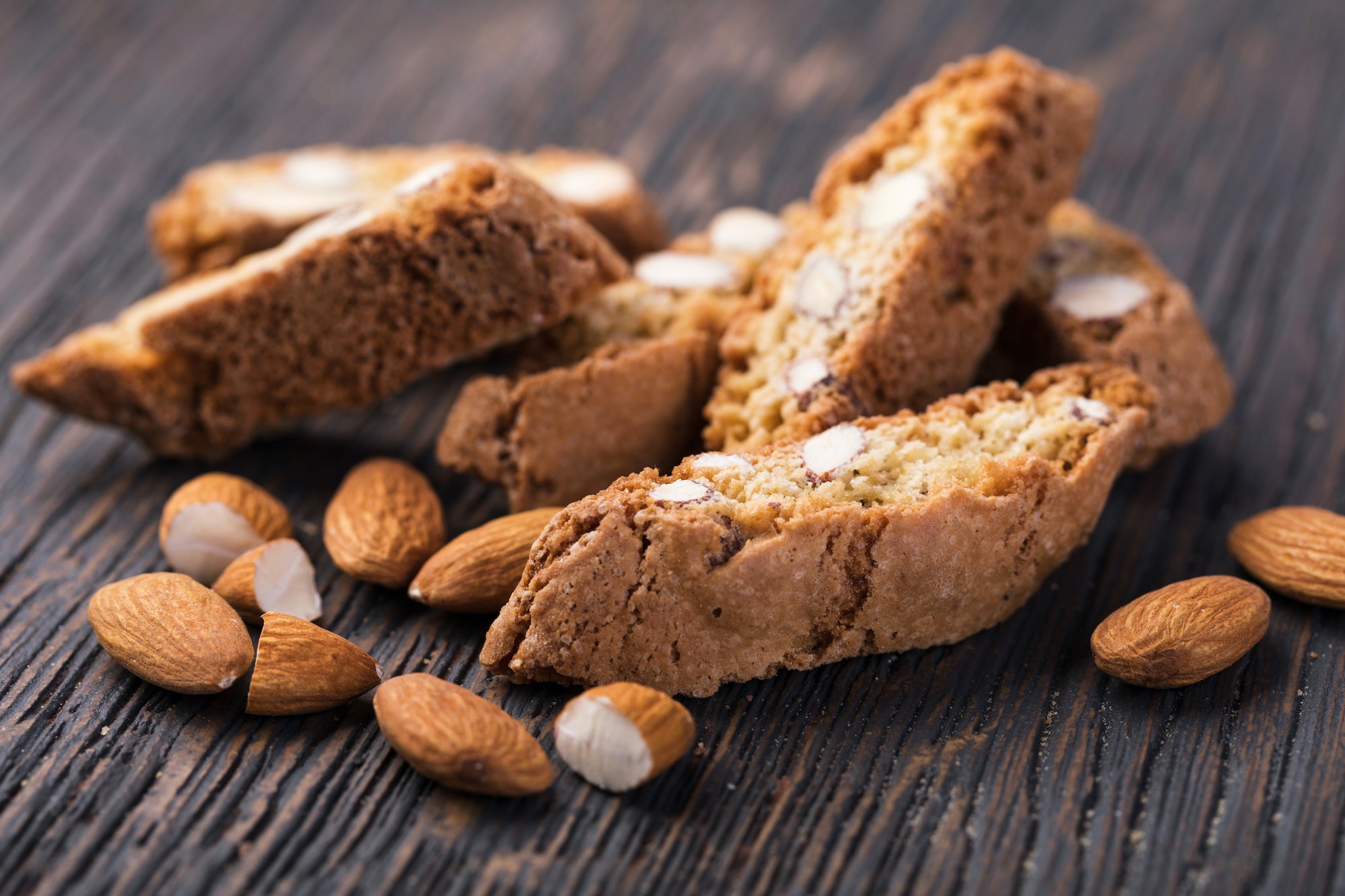
Biscotti, also known as Cantuccini, are traditional Italian almond biscuits that originated in the city of Prato, in the Tuscany region. The term “biscotti” is derived from the Latin “bis,” meaning twice, and “coctus,” meaning cooked or baked. This refers to the unique method of double baking these biscuits, which results in their characteristic crunchy texture. Biscotti are typically oblong-shaped and can be enjoyed on their own, but they are often served alongside coffee or dessert wine for dipping.
The history of biscotti can be traced back to the Roman Empire, where they were prized for their long shelf life and used as a staple food for soldiers and travelers. These early versions were made with simple ingredients such as flour, water, and sometimes spices. Over time, the recipe evolved to include other ingredients like almonds, anise, and other flavorings. Today, there are many variations of biscotti that incorporate different nuts, spices, and even chocolate.
Biscotti gained popularity in the United States during the 1990s, with the rise of coffeehouses and specialty food stores. This classic Italian treat has since become a beloved staple in many households around the world.
Ingredients
- 2 cups (240g) all-purpose flour
- 1 1/2 teaspoons baking powder
- 1/4 teaspoon salt
- 3/4 cup (150g) granulated sugar
- 1/2 cup (1 stick or 113g) unsalted butter, room temperature
- 2 large eggs
- 1 teaspoon pure vanilla extract
- 1/2 teaspoon almond extract
- 1 cup (150g) whole almonds, lightly toasted and roughly chopped
- Zest of 1 orange or lemon (optional)
- 1 cup (175g) semi-sweet or dark chocolate chips (optional)
Instructions
- Preheat your oven to 350°F (180°C). Line a large baking sheet with parchment paper or a silicone baking mat.
- In a medium bowl, whisk together the flour, baking powder, and salt. Set aside.
- In a large bowl, cream the sugar and butter together using an electric mixer on medium speed until light and fluffy, about 2-3 minutes. Add the eggs one at a time, mixing well after each addition. Stir in the vanilla and almond extracts.
- Gradually add the dry ingredients to the wet ingredients, mixing just until combined. Fold in the chopped almonds, citrus zest (if using), and chocolate chips (if using).
- Divide the dough in half and shape each half into a log, approximately 10 inches (25 cm) long and 2 1/2 inches (6 cm) wide. Transfer the logs to the prepared baking sheet, spacing them at least 3 inches (8 cm) apart to allow for spreading during baking.
- Bake the logs for 25-30 minutes, or until lightly golden and firm to the touch. Remove the baking sheet from the oven and let the logs cool on the sheet for about 10 minutes.
- While the logs are still warm, transfer them to a cutting board and use a sharp serrated knife to slice each log diagonally into 1/2-inch (1.25 cm) thick slices. Arrange the slices cut-side down on the baking sheet.
- Return the baking sheet to the oven and bake the biscotti for 10-12 minutes. Flip the slices and bake for an additional 10-12 minutes, or until the biscotti are crisp and lightly golden. Keep an eye on them to ensure they don’t overbrown.
- Remove the biscotti from the oven and let them cool completely on a wire rack.
Storage and serving
Once completely cool, keep the unfilled, unfrosted baked item airtight at cool room temperature for up to two days, or freeze for longer storage. Refrigerate any portion with perishable cream, custard or cheese fillings promptly and follow the filling’s storage guidance. Food-safety guidance.
Editorial update: October 23, 2026. Ingredient and method consistency reviewed; a documented kitchen test is still needed.
